Beyond Decoration: How a B.Voc in Interior Design Builds Creative and Professional Skills
Interior design is often associated with colours, furniture, décor and beautiful spaces. In reality, professional interior design goes much deeper. It involves understanding people, planning spaces, selecting appropriate materials, developing technical drawings, considering environmental factors and creating interiors that support the way people live, work and interact.
For students who want to turn their creativity into a practical profession, a Bachelor of Vocation (B.Voc) in Interior Design can provide a structured pathway into the design industry. At Aditya College of Art, Architecture and Design (ACAAD), Mumbai, the programme combines design theory, studio learning, practical skills, projects and professional exposure.
What Is B.Voc Interior Design?
The Bachelor of Vocation in Interior Design is a three-year undergraduate degree programme conducted over six semesters. The programme follows the University of Mumbai’s credit-based academic framework and uses English as the medium of instruction.
The course is approved by the University Grants Commission (UGC), New Delhi, while the degree is awarded by the University of Mumbai. It also provides multiple exit points, allowing students to receive a Diploma after the first year or an Advanced Diploma after the second year, subject to the applicable academic requirements.
| Feature | B.Voc Interior Design at ACAAD |
| Programme | Bachelor of Vocation (Interior Design) |
| Duration | 3 Years |
| Semesters | 6 |
| Degree Awarded By | University of Mumbai |
| Approval | University Grants Commission |
| Medium | English |
| Academic Pattern | Choice Based Credit System |
| Programme Type | Full-time |
| Exit Options | Diploma / Advanced Diploma / Degree |
Why Interior Design Requires More Than Creativity
A visually attractive room is not necessarily a successful interior design project. A professional designer must think about how the space will actually function.
For example, a residential interior may need to consider storage, movement, lighting, furniture dimensions, ventilation, materials and the lifestyle of its occupants. An office may require planning for collaboration, privacy, circulation and productivity.
This is why interior design combines creative thinking with technical and analytical skills.
Students need to learn how to transform an initial idea into a practical spatial solution. The B.Voc programme at ACAAD is designed around this broader understanding of the built environment.
A Curriculum Built Around Studio Learning
Studio-based education plays an important role in interior design. Instead of learning only through theoretical lessons, students can develop ideas through drawings, models, projects, case studies and practical exercises.
The ACAAD curriculum includes subjects such as:
- Basic Design Studio
- Interior Design Studio
- Interior Construction
- Interior Materials and Products
- Interior Drawings and Representation Skills
- History of Furniture
- Environmental Studies
- Interior Services
- Specialty Interior Design Studio
- Interior Working Drawing
- Interior Professional Practice
- Interior Design Dissertation
These subjects allow students to gradually develop their understanding of design from fundamental concepts to more specialised applications.
Developing Strong Drawing and Representation Skills
An interior designer must be able to communicate an idea clearly. Before a design is constructed, clients, contractors and other professionals need to understand what the designer has proposed.
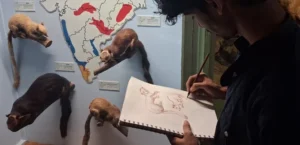
The programme therefore places emphasis on representative skills, including freehand drawing, technical drawing and model making.
These skills can help students communicate:
- Spatial concepts
- Furniture arrangements
- Material ideas
- Construction details
- Interior elevations
- Sections
- Design concepts
- Three-dimensional forms
Strong visual communication can make it easier to explain an idea from the first concept through to its final development.
Exploring Materials, Furniture and Lighting
Interior spaces are shaped by many individual elements. Materials, furniture, lighting, colours and finishes can influence both the appearance and experience of a space.
ACAAD’s programme provides opportunities to explore specialised subjects through electives, including areas such as Interior Lighting, Interior Landscape, Sustainable Interior, Set Design, Furniture Design and Product Design.
This gives students opportunities to discover particular areas of interest while developing a broader understanding of interior environments.
Learning About Sustainable Interiors
Modern interior design increasingly considers the environmental impact of materials and spaces.
Sustainable interior design can involve thinking about material selection, resource efficiency, durability, indoor environmental quality and responsible design decisions.
The ACAAD B.Voc programme includes environmental studies and introduces students to sustainable approaches within interior design.
For students entering the design profession, developing environmental awareness can be useful as sustainability becomes increasingly relevant across architecture and interior projects.
Practical Learning Through Projects and Field Exposure
Interior design is closely connected with the real world. Students need opportunities to observe existing spaces, understand materials and study how professional projects are developed.
The programme incorporates live projects, case studies, field trips and interactions with industry professionals as part of its learning approach.
Such activities can help students connect classroom concepts with practical situations.
A site visit, for example, can help students understand details that may be difficult to appreciate through drawings alone—such as material textures, spatial proportions, lighting conditions, construction processes and circulation patterns.
Understanding Professional Practice
Being a successful interior designer involves more than producing attractive designs. Professional projects require communication, coordination, planning and an understanding of project processes.
The B.Voc curriculum includes Interior Professional Practice, helping students become familiar with the professional side of the discipline.
Students can gradually learn how design concepts connect with practical considerations such as project requirements, documentation and coordination.
Multiple Exit Points: A Flexible Academic Structure
One distinctive feature of the programme is its multiple-exit structure.
Students completing the first year can receive a Diploma in Interior Design, while completing the second year can lead to an Advanced Diploma in Interior Design. Completion of the full three-year programme leads to the Bachelor of Vocation (Interior Design) degree.
This structure can provide additional flexibility for students who may need to enter the workforce earlier or continue their education progressively.
Career Opportunities After B.Voc Interior Design
Interior design graduates can explore career opportunities across different sectors of the creative and built-environment industries.
Potential career directions include:
- Interior Designer
- Interior Design Assistant
- Space Planner
- Furniture Designer
- Design Consultant
- Exhibition Designer
- Kitchen Designer
- Visual Merchandiser
- Set Designer
- Product Designer
- Interior Project Coordinator
- Freelance Interior Designer
The ACAAD programme page also notes opportunities within architecture, interior design, kitchen design and exhibition design practices. Graduates may also choose to establish their own practice or pursue further education in areas such as furniture, exhibition, product and interaction design, craft and technology, design history and theory, or energy-efficient and green design.
Building a Professional Portfolio
For creative careers, a portfolio can be one of the most valuable outcomes of an undergraduate programme.
Instead of simply listing qualifications, a portfolio can demonstrate a student’s:
- Design thinking
- Drawing ability
- Technical knowledge
- Material understanding
- Spatial planning skills
- Creativity
- Research process
- Model-making skills
- Project development
- Problem-solving approach
Students can use studio projects, case studies, drawings, models and dissertations to gradually build a portfolio that represents their development.
Why Mumbai Can Be an Interesting Place to Study Interior Design
Mumbai offers students exposure to a wide range of built environments. Residential developments, commercial offices, restaurants, hotels, retail spaces, cultural venues and historic neighbourhoods provide different examples of how interior environments are designed and used.
For aspiring designers, the city can therefore serve as an extended learning environment where classroom concepts can be connected with real spaces and changing lifestyle requirements.
ACAAD is located at the Aditya Educational Campus in Borivali West, Mumbai.
Who Should Consider a B.Voc Interior Design Course?
The programme may be worth exploring for students who enjoy combining creativity with practical problem-solving.
Interior design could be a suitable area of study if you are interested in:
- Drawing and visual communication
- Furniture and materials
- Space planning
- Architecture and built environments
- Colour and lighting
- Creative problem-solving
- Model making
- Sustainable design
- Designing for human comfort
- Developing creative concepts
Students should also be prepared for project-based learning, presentations, technical work and continuous design development.
Start Turning Creative Ideas into Real Spaces
Interior design sits at the intersection of creativity, technology, functionality and human experience. A successful designer needs to understand not only how a space should look, but also how it should work.
The B.Voc Interior Design programme at ACAAD provides a three-year academic pathway combining studio work, technical subjects, practical learning, electives, professional practice and project-based education.
For students searching for a B.Voc Interior Designing course in Mumbai, understanding the curriculum, practical exposure, qualification structure and potential career pathways can help them make a more informed academic choice.
The journey from a blank floor plan to a finished interior begins with an idea—but professional design education helps transform that idea into a space that can be experienced, understood and ultimately built.