
How a B.Des Degree in Mumbai Can Turn Creative Thinking into a Career
Design is no longer simply about making something look beautiful. Today, it influences the way people interact with products, use technology, experience spaces, recognize brands, and communicate with the world around them.
For students who naturally think creatively, enjoy solving problems, and want to transform ideas into practical solutions, a Bachelor of Design (B.Des) can be an exciting undergraduate pathway. At Aditya College of Art, Architecture and Design (ACAAD), Mumbai, the B.Des programme brings together creativity, technology, design thinking, and practical learning to help students prepare for the changing design industry.
What Is a Bachelor of Design?
The Bachelor of Design is a professional undergraduate programme designed to develop creative and problem-solving abilities alongside technical design skills.
At ACAAD, the B.Des is a four-year, eight-semester degree programme. The course is approved by the All India Council for Technical Education (AICTE), while the degree is awarded by the University of Mumbai. The medium of instruction is English, and the programme follows a Choice Based Credit System (CBCS).
Rather than focusing on one narrow creative discipline, design education encourages students to understand how ideas can be researched, developed, tested, refined, and eventually transformed into meaningful outcomes.
Where Creativity Meets Problem-Solving
One of the most interesting aspects of design education is that creativity is combined with purpose.
A designer may need to create a product that is easier to use, develop a visual identity that communicates a brand, design an interface that improves user interaction, or find sustainable alternatives to conventional materials.
ACAAD’s B.Des programme specifically aims to develop creative skills, technical proficiency, critical thinking, professional practice, and awareness of sustainable and ethical design.
This makes design education relevant not only to artistic students but also to those who enjoy analysing problems and finding innovative solutions.
Building Design Fundamentals
The early semesters provide students with a foundation in design principles and creative exploration.
The first-year curriculum includes subjects such as Fundamentals of Design, Materials and Processes, History of Art and Design, Digital Methods, Art Appreciation, Design Sketching, Craft Design Studio, Design Workshop, and Computer Applications.
Students are also introduced to typography, rendering, illustration, social media, design studios, and other areas as they progress through the curriculum.
This combination of traditional creative skills and digital learning can help students understand that modern design requires both imagination and technological confidence.
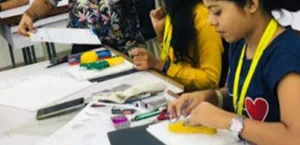
Why Hands-On Learning Matters
Design cannot be mastered entirely through theory.
Students need opportunities to sketch, experiment with materials, create prototypes, work on projects, receive feedback, and refine their ideas.
ACAAD’s programme places emphasis on hands-on projects, collaborative work, internships, workshops, and industry exposure as part of its professional-development approach.
Such experiences can help students understand how design assignments differ from purely academic exercises. A professional design brief may involve deadlines, specific audiences, technical restrictions, budgets, and practical requirements.
Learning to balance creativity with these considerations is an important part of becoming a professional designer.
Exploring Multiple Design Careers
One major advantage of pursuing a B.Des is the range of possible career directions.
According to ACAAD, graduates can explore opportunities in areas including:
- Product Design
- Graphic Design
- Interior Design
- UI/UX Design
- Fashion Design
- Advertising and Branding
- Design Consultancy
- Sustainable Design
This diversity allows students to discover the area that best matches their interests and strengths.
For example, someone fascinated by technology may gravitate toward UI/UX, while a student interested in physical objects may prefer product design. Another student might enjoy visual storytelling and choose graphic design or branding.
The Growing Importance of Digital Skills
Modern designers increasingly work across physical and digital environments.
Digital tools have become part of the creative workflow, from developing early concepts and illustrations to producing presentations, interfaces, graphics, and prototypes.
ACAAD’s curriculum introduces students to Digital Methods and Computer Applications, while also combining digital learning with sketching, illustration, materials, typography, and studio-based activities.
This blend can help students build a more adaptable skill set rather than depending exclusively on one creative medium.
Sustainability Is Becoming Part of Design
Design decisions can influence how products are manufactured, how resources are used, how long products remain useful, and what happens to them at the end of their lifecycle.
Consequently, sustainable design has become an increasingly important area of creative education.
ACAAD identifies sustainable and ethical design practices among the objectives of its B.Des programme.
For aspiring designers, understanding sustainability can therefore add another dimension to creative problem-solving and encourage more responsible approaches to design.
Why Mumbai Can Be an Inspiring Design Environment
Mumbai is a city where creativity and commerce constantly intersect. Advertising, entertainment, fashion, technology, publishing, architecture, retail, branding, and digital businesses all contribute to its creative ecosystem.
For students pursuing a B.Des course in Mumbai, the city’s diverse visual and cultural environment can become an everyday source of inspiration.
From observing public spaces and packaging to studying advertisements, digital experiences, products, architecture, and fashion, students can learn to look at ordinary surroundings through a designer’s perspective.
Building a Designer’s Mindset
A successful designer is not simply someone who can draw well.
Design requires curiosity, observation, research, communication, experimentation, adaptability, and the willingness to rethink an idea.
The B.Des journey can help students develop these qualities by encouraging them to approach challenges from different perspectives. Instead of immediately searching for an answer, students learn to understand the problem first, explore possibilities, test concepts, and improve their solutions.
That mindset can remain valuable well beyond college.
Creating a Strong Professional Portfolio
For students entering the design industry, a portfolio can be one of their most important professional assets.
A portfolio should demonstrate not only finished designs but also the thinking behind them. Sketches, research, mood boards, iterations, prototypes, design decisions, and final outcomes can collectively tell the story of a student’s creative process.
Projects developed during a B.Des programme can therefore become stepping stones toward internships, freelance opportunities, employment, or further education.
Is B.Des the Right Choice for You?
A Bachelor of Design can be a strong option for students who enjoy creativity but also want to apply it to real-world challenges.
If you are interested in design, technology, visual communication, products, user experiences, branding, interiors, fashion, or sustainable solutions, a multidisciplinary B.Des education may offer the flexibility to explore several directions before developing a professional specialization.
The most important qualities are curiosity and a willingness to experiment. Design is an evolving field, and tomorrow’s opportunities may require skills that are only beginning to emerge today.
Design Your Future, One Idea at a Time
A creative idea becomes valuable when it can solve a problem, communicate a message, improve an experience, or create something meaningful.
The B.Des programme at ACAAD, Mumbai is structured around this connection between creativity and purpose. With a four-year curriculum covering design fundamentals, digital methods, materials, typography, illustration, studio work, professional ethics, and other areas, the programme provides students with a broad foundation for exploring the design profession.
For aspiring designers, the journey is ultimately about more than earning a degree. It is about learning to observe differently, think creatively, solve thoughtfully, and design with purpose.
Because the future does not simply need people who can imagine it—it needs designers who can shape it.